| |
|
|
| |
| |
|
|
 To enjoy this web site, please instruct your browser to accept scripts. To enjoy this web site, please instruct your browser to accept scripts. |
| |
|
|
| |
| |
This section provides general information about the lab, including location, history, facilities, and funding.
|
|
|
| |
| |
The laboratory is located on the campus of the
University of New Orleans, in Louisiana.
The principal investigator is Dr. Roberto Refinetti.
New Orleans is located in the southern United States, by the Gulf of Mexico. The local temperature averages
82°F (28°C) in July and 54°F (12°C) in January with frequent rain all year round.
With a population of 400,000 people in the city itself and 1,300,000 in the metropolitan area,
New Orleans is a major urban center, known for its distinct music, its exquisite cuisine, and the Mardi Gras festival.
For our contact information, please visit the Contact Information section of this web site. |
 |
History
|
|
The lab was established by Dr. Refinetti in 1986.
As shown in the map below, the lab has moved quite a few times since its inception.
We have been in South America and in the West Coast, East Coast, and
Midwest of the United States. Often, but not always, we have been associated with universities.
We do not actually like to move, so we hope that our current location will
be our last location. However, if the past is a hint to the future,
we will probably be moving again sometime in the next decade.
|
|
| |
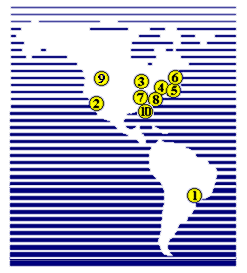 10
10 2020-
New Orleans, Louisiana
9 2014-2020
Boise, Idaho
8 1999-2014
Walterboro, South Carolina
7 1998-1999
Birmingham, Alabama
6 1997-1998
Mahwah, New Jersey
5 1992-1997
Williamsburg, Virginia
4 1990-1992
Charlottesville, Virginia
3 1989-1990
Champaign, Illinois
2 1987-1989
Santa Barbara, California
1 1986-1987
São Paulo, Brazil
|
|
Buildings
|
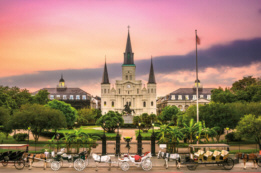
New Orleans
View of Jackson Square with St. Louis Cathedral at the center
|
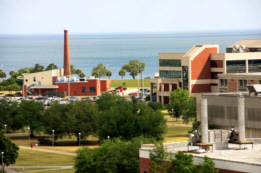
The UNO Campus
View of the university campus by Lake Pontchartrain
|
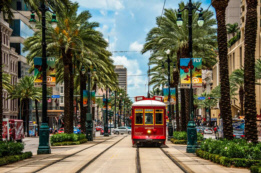
Streetcar
View of a streetcar (tram) on St. Charles Avenue
|
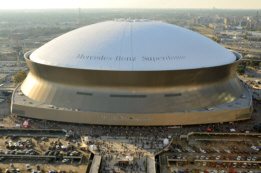
Superdome
View of the Ceasars Superdome (home stadium of New Orleans Saints)
|
Funding
|

 |
The major source of funding for research in the lab is the U.S. government
through the National Science Foundation (NSF) and the National Institutes of Health (NIH). The following are
some of the projects that have been funded by these agencies:
|
|
NSF IBN-0343917 Homeostatic and Circadian Control of Energy Expenditure
April 2004 to March 2007
NIH MH-066826 Circadian Rhythms: Photic Sensitivity and Behavior
December 2002 to November 2005
NIH MH-055825 Homeostasis and Circadian Rhythms
August 1996 to July 1999
NSF IBN-9507452 Homeostasis, Circadian Rhythmicity, and Behavior
September 1995 to August 1998
NSF DUE-9450937 Psychobiology Laboratory Improvement Program
August 1994 to June 1996
NIH MH-010146 National Research Service Award
October 1991 to June 1992
|
About Louisiana:
Capital: Baton Rouge
Largest city: New Orleans
U.S. State since: 1812
Area: 52,000 sq mi (136,000 km 2)
Population: 4,700,000 people
Median household income: $45,000 (USD per year)
Racial background: 63% Caucasian
Universities: see map below
 |
|
|
Facilities
|
The laboratory is well equipped, although the type of research that
is conducted does not require sophisticated equipment. Generally, animals are housed in plastic
cages inside individual ventilated light-tight chambers. Illumination within the chambers is
controlled by electronic timers. Data collection is conducted around-the-clock by computers.
The two variables most commonly monitored are locomotor activity and body temperature. Locomotor
activity is monitored by means of running wheels or infrared motion detectors. Body temperature is
monitored by radio telemetry, which involves the use of surgically implanted temperature sensitive
radio transmitters and separate radio receivers or, more recently, by temperature sensitive PIT tags
and custom made antennas. |
|
 |
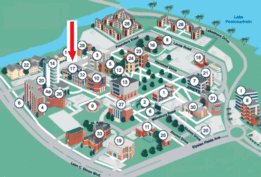
The Lab: 2020
The red arrow in the picture shows
the location of the lab on the campus
of the University of New Orleans.
|
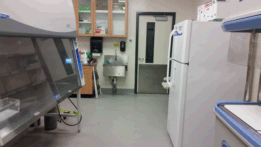
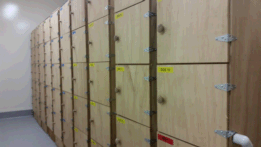
The Lab: 2014
Here are two partial views
of the lab in 2014, then at
Boise State University, in Idaho.
|
The Lab: 2008
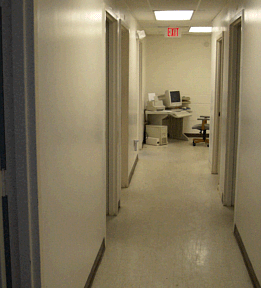
This is a partial view of the hallway leading
to six of the nine rooms that made up the
new lab suite to which we moved in 2008
while we were still in South Carolina.
|
The Lab: 2000
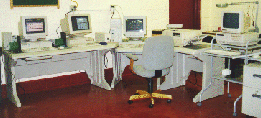
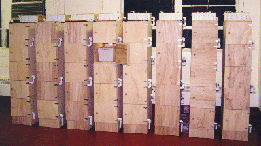
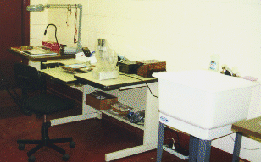
Here are three partial views of the lab in
the year 2000, when we moved to a satellite
campus of the University of South Carolina.
|
The Lab: 1996
Here are three partial views of the lab in
1996, a few years after we moved to the
College of William & Mary (in Virginia).
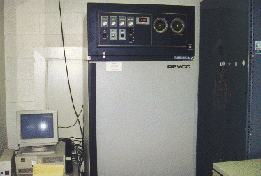
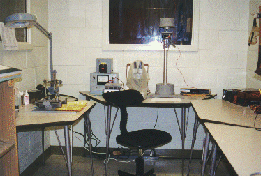
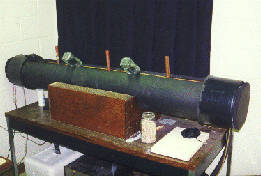
|
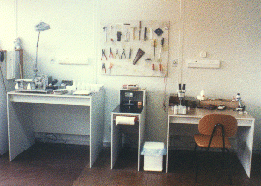
The Lab: 1986
Here are two partial views of the lab
when the lab was first established (at
the University of São Paulo in 1986).
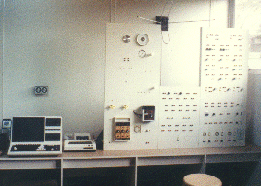
|
|
|
|
© R. Refinetti · www.circadian.org ·
All rights reserved
|
|
 Contact us



 Home
Home